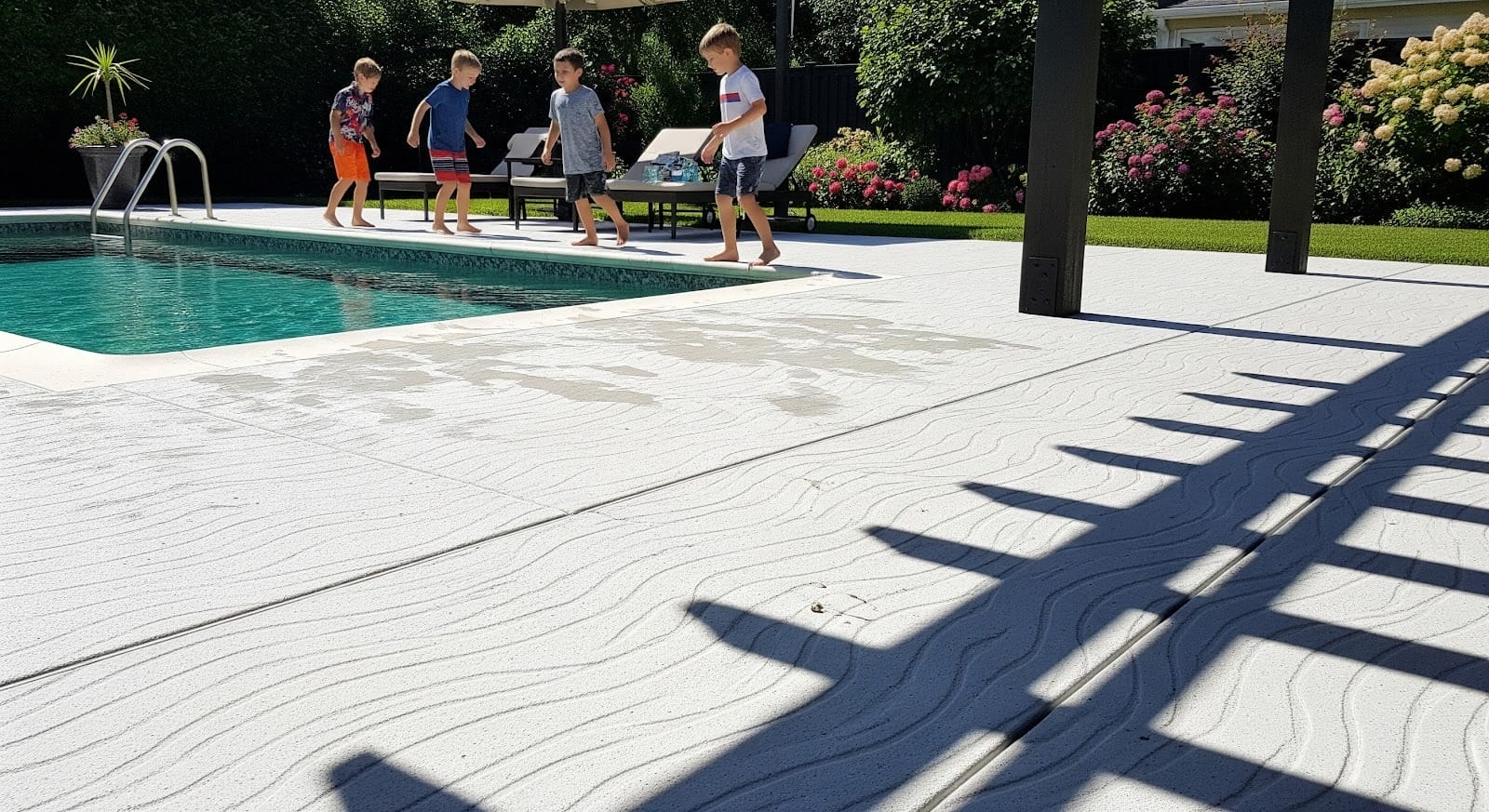
Which is the most effective slip-resistant flooring on pool decks during a backyard upgrade?
The renovation of your backyard is fun until you realize that the pool area is among the most likely spots to fall, and to do so in the most unpleasant manner. Wet feet, sunscreen, kids running, and friends with drinks—it is pretty much the worst place in the world to slip. However, this risk is manageable as long as you are using the right surface.
The good news: slip-resistant flooring for pools does not need to be industrially designed, nor does it have to feel rough and uncomfortable. You can absolutely have something that looks sharp, fits the style of your home, and allows everyone to go about the place feeling confident.
This handbook takes you through the details of what “slip-resistant” means, the most suitable materials to use, and some tips that will help you choose the correct surface for your climate, budget, and backyard specifications.
What is meant by slip-resistant (and what to look for)?
Slip-resistance is not a single magic material; it is a composite of surface texture, drainage, and the behavior that the finish exhibits when wet.
These are the features that are most important:
- Grip when wet: This variable must provide enough grip to prevent your feet from slipping, but at the same time, not be so rough that it causes pain to bare feet.
- Drainage and water flow: The use of a good texture fails miserably if water is left lying on the surface. Minimization of slopes, intelligent fall, and effective drains mitigate hazards.
- Consistent performance: There are surfaces which are good initially but become greasy with use, algae buildup, or certain sealants.
- Surface temperature: Pools can be scorching in the sun. A burning surface that does not hurt your feet mechanically will still destroy the experience thermally.
- Maintenance reality: If an area requires continuous cleaning to maintain its slip-resistance, it might not be the most suitable fit for your routine.
When comparing alternatives with a contractor or supplier, enquire about the performance of the surface when wet, what finish or seal would be used, and how cleaning influences grip over time.
Best slip-resistant pool floors (advantages and disadvantages)
There is no single “best” backyard for everyone—you have to choose what fits you best based on your budget, style, the substrate you already have, and how far you want to go with construction. These are the most widespread pool winners.
Patterned finishes, exposed aggregate, or textured concrete (broom finish)
Overall, concrete is one of the preferred options as it is strong, versatile, and can be coated in numerous ways.
- Why people like it: Long life, cost-effective for large areas, and not difficult to fit into modern or classic designs.
- What to watch for: Smooth trowelled concrete is slippery when wet. Certain sealers may also enhance slickness, so finishing options are important.
- Feel: Exposed aggregate is going to be grippy but somewhat rough on delicate feet; broom finishes are a happy medium.
Concrete is also a good choice when you already have an existing slab and you wish to revamp the slab surface without necessarily constructing the entire ground from scratch.
Pavers (concrete or clay)
The joints allow them to be extremely slip-friendly, and the texture of the surface is usually natural.
- Why they are popular: They are simple to mend (you can change a single paver rather than the complete surface), come in many designs, and are very drainable.
- What to watch for: If the base is not ready, weeds or shifting may occur. Certain pavers may become slippery when they are sealed incorrectly.
- Comfort: Generally comfortable to walk on, but darker pavements can be hot in summer.
Pavers can be used with landscaped borders and outdoor living areas in case you prefer an organized, landscaped appearance.
Natural stone (travertine, limestone, sandstone, etc.)
Stone has been popular for its quality appearance and, in most occasions, naturally slip-friendly feel—particularly in exterior-specific finishes.
- Why people like it: Nice aesthetic, lots of design freedom, and many stones remain cooler than concrete.
- What to watch for: There are stones that require sealing and careful product selection since they may get slick. Softer stones can also chip or abrade quicker due to pool chemicals.
- Comfort: Excellent, especially travertine.
Stone may be an excellent option when you are hoping that the upgrade of your backyard will be completed with the purpose of recreating the impression of a resort, but you should consider the appropriate finish and maintenance schedule.
Outdoor tiles (unless they are specifically pool rated)
Tile might be a good choice, but only if it has a particular designation as a material that can be used outdoors in wet conditions and is properly installed.
- Why people like it: Clean, crisp look; huge selection of styles; hoses down easily.
- What to watch for: If you select the wrong tile (or finish), it may be dangerously slippery. The quality of installation is also important, specifically regarding waterproofing and choice of adhesive.
- Comfort: Varies—there are tiles that are comfortable, and there are those that are hard and hot.
Assuming that you are a lover of tile, the first point that matters is not the appearance, but the slip rating and characteristics for outdoor use.
Resin bound or rubber coating (specialty options)
These are extremely grippy and comfortable surfaces that are commonly used in commercial wet locations.
- Why it is popular: It has great traction, is softer to walk on, and can be good for kids.
- What to watch for: There is great diversity in terms of quality; UV stability is important, and not all products are applicable to all substrates or climates.
- Comfort: Typically very good.
These might be worth considering in case safety and comfort are the most important aspects and you are not tied to conservative finishes.
The most suitable choice is based on your backyard upgrade ambitions
Prior to selecting a material, you need to step back and consider the way the space will be utilized in the coming years.
Ask yourself:
- What is the average age of people using the pool (Kids, Adults, Guests, Older Members of the Family)?
- Do you desire a low maintenance surface, or are you content with periodic sealing?
- Is the upgrade cosmetic, or are you repairing drainage, leveling, or cracking as well?
- Do you prefer it to be consistent with other outdoor areas (BBQ area, outdoor shower, pergola)?
One method to make a practical decision would be to list your top three priorities—traction, comfort, cost, heat reduction, style, or repairability—and filter materials based on this list.
Do not allow a sealer to mess up your slip
This is a sneaky one. Individuals often select a very large surface, lay down a greasy or unsuitable sealer, and inadvertently make it oily in the rainy season.
When you are sealing, insist on a finish that promotes wet-area traction. Most times, a matte or a well-textured covering system is safer than an extremely glossy finish. And one more thing: remember how sunscreen, body oil, and even pool chemicals may react with the finishes after some time. Maintaining balanced pool chemistry with reliable testing kits from watertest systems can help prevent chemical reactions that degrade slip resistance over time. Therefore, constant cleaning is not optional; it is a part of maintaining the grip you spent money on.
When resurfacing an existing slab, address traction and drainage jointly
Many pools are already on a concrete base. Assuming that the base is structurally sound (not heaving, massively cracked, or too steep), resurfacing is an intelligent approach to achieving a safer and fresher appearance without tearing everything out.
In Wollongong, for example, homeowners consider alternatives such as Spraycrete Wollongong to provide old concrete with a new textured look and feel that enhances the aesthetics. The trick here lies in resurfacing not just being a pretty layer; your installer must gauge cracks, movement, and surface falls such that water does not pool where foot traffic is.
Simple changes in slope and drainage may have a significant effect on real-world slip risk.
Instant survey: Selecting non-slip flooring that is pleasant to stay on
Whenever you are comparing samples or quotes, go through this brief checklist:
- Is it possible to test a sample wet, not just dry?
- Are bare feet comfortable on it, even for children?
- Does it avoid sharp edges or harsh textures?
- Will it remain slip-resistant when cleaned (not just due to a special treatment)?
- Does it fit with the type of water in your pool and the landscaping?
- Is it able to withstand the heat and sun in your yard?
If a salesperson is unable to answer these clearly, that is a sign to slow down and seek more information before committing.
What to do with the timing of the flooring selection
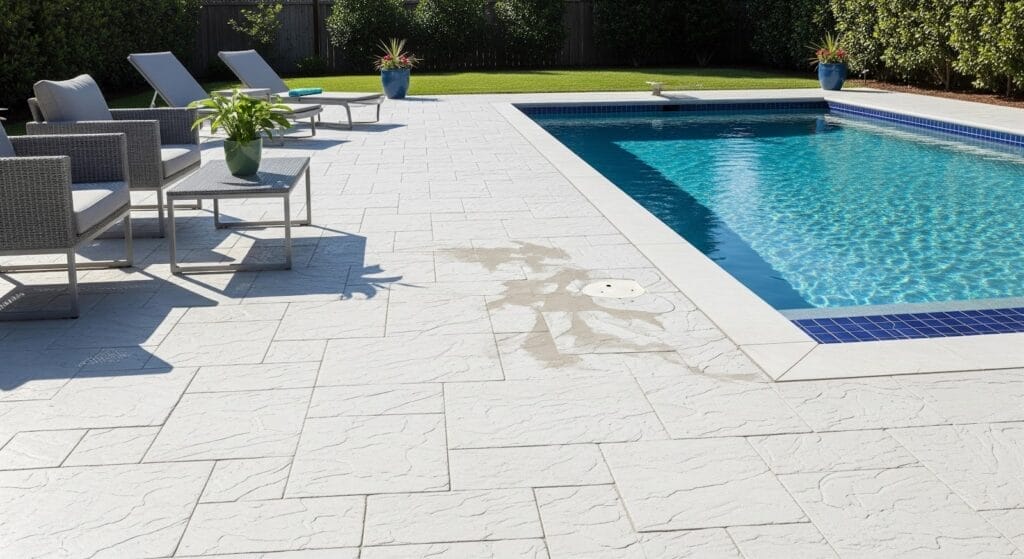
Flooring is closely connected with other choices: pool coping, fencing, landscape levels, drainage, and outdoor entertainment areas. By selecting prematurely before verifying heights and falls, you can find yourself having to rework edges or come up with awkward steps.
Should your backyard improvement involve a more extensive Pool Renovation, you should look at locking in your poolside surface only after you have verified:
- Completed pool edge (coping or bullnose options) details.
- Location and falls required for the drainage.
- Locations of fences and gates.
- Any outdoor showers, garden beds, and retaining edges which are new.
This can make your choice of flooring appear truly purposeful—and avoids the patchwork transitions that are difficult to ignore when everything is finished.
Summation: Safe can be stylish
The ideal non-slip pool flooring is the one that remains unaffected when wet, is comfortable to walk on, conforms to your maintenance habits, and fits your future style. The popularity of textured concrete, pavers, and some types of stones serves a purpose; however, the most suitable one for you depends on how you intend to use the area and whether you need to resurface or do a complete rebuild.
Knowing what your existing pool surround is (plain concrete, pavers, tile, etc.), and what appearance you want it to have (modern, coastal, resort-style, minimalist), I can make a list of the top 2-3 choices that you can price and compare.
What is your existing poolside surface, and what is your greatest priority for the new surface: traction, cooler temperature underfoot, or low maintenance?